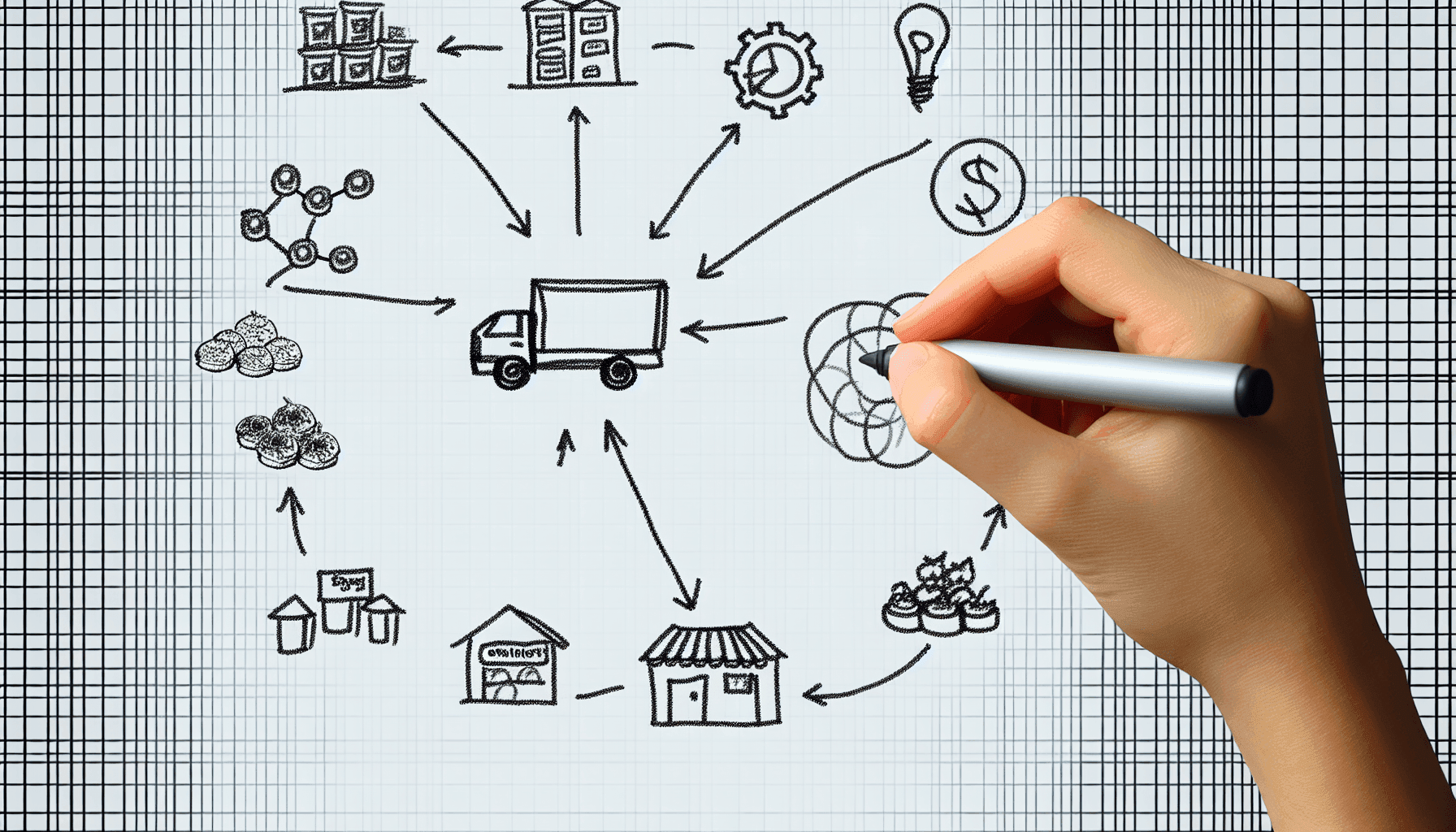
food distribution optimization: Unlocking Efficiency and Customer Satisfaction in 2025
Mastering Last-Mile Logistics with AI and Dynamic Routing
Okay, let’s talk about a hot topic in logistics right now: Mastering the last mile. You know how all those delivery services seem to have gotten better lately? Well, there’s a reason for that. The last mile of delivery, which deals with getting products from a distribution center to the final destination, is often the most challenging part of the entire supply chain. It’s where efficiency and customer satisfaction often clash. So, how do we optimize this process? That’s where technology, especially AI, comes into play. AI has the potential to revolutionize this sector, making sure that deliveries are not just faster but also more reliable.
I mean, think about it. We now have algorithms that can predict the best routes to take for deliveries, factoring in real-time traffic data. Gone are the days of relying solely on paper maps with tedious route calculations. Instead, with AI-driven platforms, we can adjust routes dynamically as conditions change, which is absolutely crucial for ensuring that customers receive their orders on time. It’s like having a personal assistant that’s always three steps ahead, preparing for whatever obstacles may arise.
Now, let’s discuss why a focus on food distribution optimization specifically is essential here. The food industry has unique requirements, especially regarding temperature control, shelf-life, and regulatory compliance. Using AI to optimize these particular elements can drastically enhance efficiency and customer satisfaction. Imagine getting perfectly fresh groceries delivered to your door in an optimized time frame, rather than having to wait hours or potentially getting food that’s not fresh, simply because routes weren’t optimized. The benefits here are countless!
One of the exciting aspects of AI is its ability to learn from past data. For example, it can analyze delivery times, weather conditions, customer feedback, and even local events that may cause delays. This data is invaluable; it allows companies to continually improve their logistics strategies. When we take a step back and consider that these AI algorithms can adapt on the fly, it’s truly mind-blowing. They’re not just programmed with a one-size-fits-all solution. They actually evolve based on a multitude of factors.
“The last mile is critical. It’s not just about getting a package from point A to point B anymore; it’s about creating an experience that customers will remember.”
But let’s not kid ourselves; there are hurdles to overcome. The reliance on technology means that we also need skilled employees to manage and interpret the data these AI systems generate. A human touch is still incredibly important in this equation. It’s not just about numbers and algorithms; it’s also about understanding the needs and preferences of customers. Hence, a balanced approach that incorporates both technology and human intelligence is paramount for future success in last-mile logistics.
In summary, we find ourselves at a pivotal moment in logistics and distribution. The combination of AI, data analytics, and human insight can lead to unprecedented levels of efficiency and customer satisfaction. Mastering the last mile isn’t just a goal—it’s becoming a competitive necessity. Companies that fail to embrace these new strategies could very well fall behind. The future is bright, and those who are proactive in adapting to these changes are going to reap the rewards. So, are you ready to embrace the future of last-mile logistics? I certainly am!
Bridging Data Gaps for Smarter Supply Chain Decisions
In today’s fast-paced world, food distribution optimization is not just an option but a necessity. As we look toward 2025, leveraging technologies such as Artificial Intelligence (AI), real-time data, and strategic routing will play a pivotal role in enhancing supply chain efficiency. So, how can companies effectively bridge the data gaps that often hinder their operations?
When it comes to supply chains, especially in the food distribution sector, the integration of AI can serve as a game-changer. By utilizing real-time data, companies can gain insights into consumer behavior, monitor inventory levels, and forecast demand more accurately. This means that businesses won’t just be reacting to trends but proactively managing them. For instance, through dynamic routing powered by AI, deliveries can be optimized to account for traffic patterns and weather conditions, ensuring that products reach customers in the freshest state possible. Moreover, the use of predictive analytics can significantly reduce food waste, allowing distributors to adjust their stock based on anticipated demand.
Furthermore, organizations can create a more transparent supply chain by investing in technologies that improve data sharing among stakeholders. This transparency can foster trust and collaboration between suppliers, distributors, and retailers. As a result, companies can respond quickly to any disruptions and make informed decisions that benefit not just themselves but the entire supply chain.
In conclusion, the journey to a smarter supply chain in 2025 is paved with opportunities for innovation and growth. By embracing AI, harnessing real-time data, and fostering collaboration among all stakeholders, food distributors can enhance their operational efficiency and customer satisfaction. It’s a win-win for everyone involved, encouraging a more sustainable approach to food distribution in the years to come.
Enhancing Operations with Strategic Zone Engineering
In the fast-evolving world of food distribution, optimizing supply chains is not just a trend—it’s a necessity for survival. As we look ahead to 2025, food distributors must embrace innovative approaches like AI, real-time data integration, and, more importantly, strategic zone engineering to enhance operational efficiency. But what exactly does strategic zone engineering entail, and how can it transform the landscape of food distribution? Let’s take a deeper dive into this vital topic.
Strategic zone engineering refers to the methodical planning and design of logistical zones within warehouses and distribution centers. This concept isn’t merely about arranging physical spaces—it’s about optimizing the way goods move through these areas. By utilizing data analytics, distributors can assess the flow of products and strategically arrange storage, picking, and packing zones to minimize transit times and increase efficiency. Consider the impact of this on the overall supply chain; each improvement in zone design can lead to better resource allocation, reduced operational costs, and ultimately, enhanced customer satisfaction.
Imagine a bustling distribution center where every movement is calculated. Deliveries arrive at specific times, and the zones are ready to accommodate varying types of goods. For instance, perishables are stored in climate-controlled zones, while dry goods are in a separate area. By creating tailored zones based on product needs, distributors can streamline their operations significantly. Furthermore, this approach allows for clear identification of areas that require additional resources, ensuring that bottlenecks are resolved before they impact delivery schedules. In an environment where customer satisfaction hinges on timely deliveries, the advantages of strategic zone engineering cannot be overstated.
With the advent of AI and real-time data, food distributors further enhance their zone engineering efforts. By leveraging machine learning algorithms, companies can predict demand fluctuations and adjust their operational layouts accordingly. For instance, if certain products see a spike in demand, zone configurations can be altered on the fly to accommodate increased traffic without overwhelming staff or facilities. This adaptability creates a smoother workflow and responsive logistics management, which is essential as consumer expectations continue to rise in the wake of rapid digitization.
Why a Unified Tech and Human Approach Is the Future
In the ever-evolving landscape of food distribution, the complexities of managing supply chains are becoming increasingly pronounced. By 2025, the need for a unified approach—merging technological advancements and human touch—will not just be beneficial but essential. As we explore this fusion, it’s critical to recognize how AI, real-time data, and strategic routing can empower food distributors. However, while technology provides efficiency, it’s the human element that ensures creativity, empathy, and problem-solving in a rapidly changing market.
First off, let’s admit that technology has transformed our lives dramatically. But relying solely on technology, especially in the food distribution sector, can lead to oversights that a human element could easily catch. For instance, AI can optimize routes and predict demand, but it lacks the intuition to understand a customer’s unique needs or the nuances of local preferences. Here’s where a human touch is invaluable. It allows for personal connections and the ability to adjust to unexpected challenges—something a machine simply cannot do.
Moreover, the balance between tech and human insight enhances decision-making processes. Real-time data is pivotal; it provides the information necessary to adapt swiftly to operational needs. Yet, this data must be interpreted. Humans can bring context to the figures, allowing distributors to make informed choices that reflect not just numbers but also the underlying stories. In doing so, the quest for food distribution optimization leads to genuine improvements in customer satisfaction, as the responses to their needs become timely and relevant. This is a win-win scenario—technology automates the routine while people manage the complex.
Ultimately, achieving a successful partnership between tech and human contributions is about understanding that neither is a replacement for the other. They are, in fact, complementary. While AI can process vast amounts of data and identify patterns faster than any human, it is the empathy, connection, and strategic thinking of human operators that will edge out competition in the food distribution sector. The future awaits, and the call for leaders who can embrace and integrate both aspects into their operations will be key to unlocking unprecedented efficiency and satisfaction for customers in 2025.
How can a unified approach improve customer satisfaction?
A unified approach allows for quicker adaptations to customer needs, integrating real-time feedback, enhancing communication, and addressing concerns more efficiently.
Why is maintaining a human element crucial?
The human element is crucial for fostering relationships, understanding unique market dynamics, and navigating complexities that technology alone may overlook.
#foodDistributionOptimization, #AIIntegration, #SupplyChainManagement, #CustomerSatisfaction, #HumanTechnologySynergy