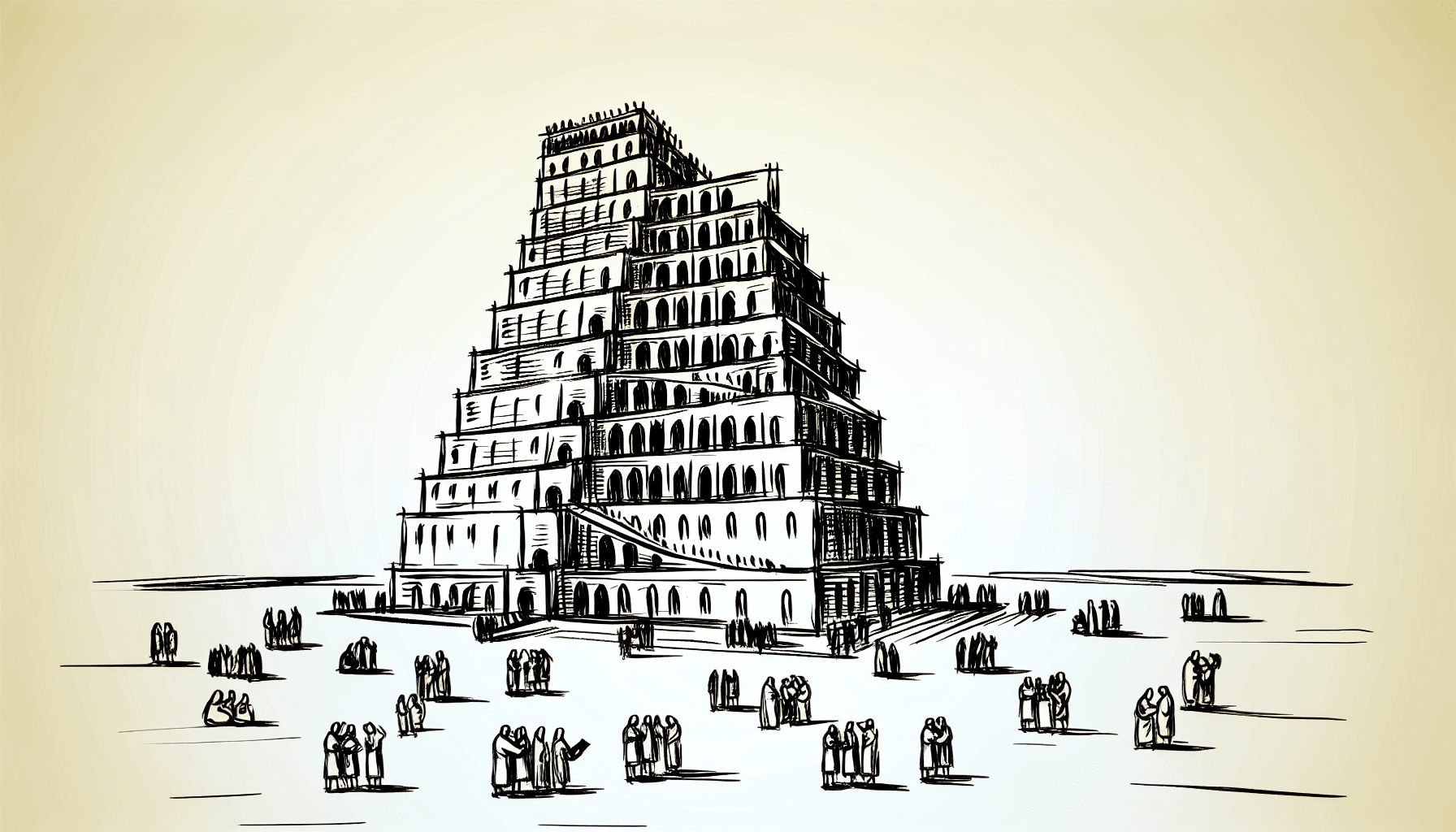
Tower of Babel: What Archaeology Reveals About the Legendary Structure
The Historical Roots Behind the Tower of Babel Narrative
The Tower of Babel, a narrative from the Book of Genesis in the Bible, has intrigued scholars, theologians, and laypeople alike for centuries. This story, famous for its theme of confusion among languages, serves as a poignant reflection on human ambition and divine intervention. Specifically, the tale describes humanity’s attempt to build a tower that reaches the heavens, leading to a divine response that fragments their language, resulting in a scattered populace.
But what are the historical roots behind this compelling narrative? Many believe the story is more than just a myth; it might reflect historical events and societal changes within the ancient Near East. Archaeological findings, particularly those from Mesopotamia, provide insights into the cultural context in which the Tower of Babel was conceived.
Historically, ziggurats, massive structures built in ancient Mesopotamia, likely served as the physical inspiration for the Tower of Babel narrative. For instance, Etemenanki, a significant ziggurat dedicated to the god Marduk in Babylon, is commonly cited as the real-world counterpart to the mythical tower. Etemenanki stands as evidence of human ambition and devotion, symbolizing a yearning to connect with the divine. Its construction involved the collaboration of various people, indicating a unity that would later be shattered in the biblical narrative.
In examining this connection, a deeper understanding emerges about the implications of language and communication. The narrative of the Tower of Babel reflects a cultural memory embedded in societies that experienced shifts in linguistics and cultural identity. Considering the recent discussions surrounding globalization and communication in our modern world, one might argue that the essence of the story still resonates today. The idea of languages melding and clashing seems particularly relevant in our increasingly interconnected global landscape.
Beneath the layers of the Tower of Babel narrative lies a rich historical tapestry woven from threads of cultural identity, ambition, and divine influence. As we continue to unearth archaeological treasures from ancient civilizations, we are reminded that myths may hold fragments of truth reflecting the historical experiences of those who came before us. The Tower of Babel serves as a multifaceted symbol, transcending its biblical origins to represent broader themes about humanity’s quest for understanding and connection.
Etemenanki: The Real Ziggurat That Inspired a Biblical Legend
Have you ever thought about the stories we tell and the origins behind them? The legend of the Tower of Babel has captivated audiences for centuries. It speaks of human ambition, pride, and a divine response to our attempts at greatness. But what if this story is more than just a myth? Could there be a kernel of truth buried within? This is where the Etemenanki ziggurat of ancient Babylon comes into play. Historically, this structure is often considered the likely inspiration for the biblical account of the Tower of Babel.
The Etemenanki, which means “House of the Foundation of Heaven and Earth,” was a massive ziggurat located in the city of Babylon, believed to date back to the 6th century BCE. Its construction was likely an attempt to honor Marduk, the chief god of Babylon, and it stood as a symbol of Babylonian engineering prowess. Imagine this grand structure towering over the landscape, its multiple tiers stretching toward the sky, just as the biblical tale describes. Could the builders of Etemenanki have inspired the biblical authors, the creators of the Tower of Babel narrative, due to the sheer scale and ambition represented by their own structure?
When archaeologists uncovered the ruins of the Etemenanki in the 19th century, they revealed not just a physical structure but a cultural monument that encapsulated the essence of a civilization striving to reach the heavens. This ziggurat was not merely a temple; it embodied an entire city’s aspirations, creativity, and devotion. Historians have noted the parallels between the ziggurat’s towering ambitions and the ambitions of humanity seen in the Tower of Babel legend, which describes humanity’s attempt to build a tower to the heavens only to be thwarted by divine intervention.
As we delve deeper into the story of the Tower of Babel and the ziggurat Etemenanki, we begin to realize that myths often arise from a shared history, one that echoes through time. In many ways, the creation of the Tower of Babel narrative may have served as a cautionary tale. It highlights the limits of human ambition in the face of divine authority. Through the mechanisms of cultural memory—stories passed down orally or through written texts—the legend of Babel both reflects and distorts the reality of ambitious projects like the construction of ziggurats.
Exploring the connections between the Etemenanki and the Tower of Babel invites us to examine how civilizations interpret their own narratives. It is fascinating to think that the Etemenanki, in its grandeur, may have been a source of inspiration for a story that serves as both a reflection on human nature and a demonstration of divine power.
The legend of the Tower of Babel, woven together with the reality of the Etemenanki, offers profound insights into both historical and contemporary societies. The stories we tell about ourselves reflect not only our aspirations but also our fears, limitations, and relationships with higher powers. Whether as a cautionary tale or a historical account, the tale of Etemenanki and Babel serves as a reminder of what it means to aspire for greatness and the lessons we learn when we reach too far.
In conclusion, the exploration of the Etemenanki ziggurat provides meaningful context to a legend that has withstood the test of time. As we look back on the ruins of this remarkable structure, we are reminded that amidst our own ambitions, there is value in reflection and understanding the past that shapes our present. Who knows what more discoveries await? Perhaps, in uncovering our past, we are also revealing the stories of our future.
Linguistic Confusion or Cultural Memory: What Cuneiform Evidence Tells Us
The story of the Tower of Babel serves as a profound narrative that touches on human ambition, misunderstanding, and the quest for unity. As the legend unfolds, it raises questions that delve deep into our linguistically rich history and our inherent cultural memories. Scholars have long sought to decipher what aspects of truth might lie beneath this ancient tale. Could it possibly indicate a misplaced cultural memory rather than a mere fabrication? When delving into cuneiform evidence, this intriguing narrative becomes even more fascinating.
Cuneiform, the ancient writing system invented by the Sumerians around 3500 BC, acted as a powerful communicative tool across various Mesopotamian civilizations. Its resurgence in the study of the Tower of Babel is particularly important, as scholars unearth details that hint at an early understanding of language divergence. Notably, cuneiform tablets document various local dialects and languages which, over time, present a tapestry of humanity’s struggle with linguistic connection. So, what can we learn from these ancient writings? They suggest a historical foundation of language that precedes the biblical narrative, reflecting a time when communication was an evolving art shaped by the diverse cultures inhabiting Mesopotamia.
When interrogating the possible connections between the Tower of Babel and cuneiform evidence, it becomes clear that the terms of interaction among languages might have left lasting imprints on the collective human memory. In fact, the linguistic confusion described in the biblical tale correlates with historical phenomena where civilizations interacted and exchanged ideas, even creating hybrid languages, bearing testimony to cultural mixing. Although the Tower may symbolize a myth, it also serves as a reminder of real events where language barriers led to significant social consequences. This overlapping of myth and memory illustrates the profound impact that linguistics has on our understanding of history and culture itself.
How Modern Archaeology Reframes Ancient Myths Today
Have you ever wondered how ancient tales like the Tower of Babel capture the imagination across generations? It’s fascinating how stories handed down through the ages can carry kernels of truth intertwined with the mystique of myth. Modern archaeology plays a crucial role in peeling back the layers of these age-old legends, revealing connections to the past that challenge our understanding of history. Let’s explore how today’s archaeological discoveries shift the narrative of these timeless myths.
The Intersection of Myth and Memory
Many ancient cultures share common threads in their myths, often formed as responses to significant historical occurrences. The tale of the Tower of Babel, for instance, speaks volumes about humanity’s desire for unity and the confusion that followed. But research suggests this story may not merely be a figment of imagination. Archaeological findings, particularly in Mesopotamia, hint toward real structures like ziggurats that could have inspired such legends. As archaeologists delve into the ruins of ancient civilizations, they unearth artifacts and architectural designs that resonate with these myths, hinting at a deeper cultural memory.
Cultural Context in Archaeological Narratives
Understanding the surrounding cultural context is essential in interpreting these archaeological finds. The stories we tell about our past help shape our identity as a society. As we uncover more about these ancient civilizations, we begin to realize that the myths we once thought to be just stories carry reflections of actual historical events, societal dynamics, and conflicts. This not only encourages a reassessment of the narratives but also a rethinking of how we define cultural heritage and memory. With each excavation, modern archaeology invites us to reconsider our interpretations of these narratives while acknowledging the complexity of human experience.
The Future of Myth through Archaeology
As we look ahead, it’s clear that the intersection of modern archaeology and ancient myths will continue to evolve. In an age where technology is advancing at an unprecedented rate, tools such as ground-penetrating radar and sophisticated dating techniques will unveil layers of history that have long been hidden. This journey doesn’t just satisfy our curiosity but invigorates our cultural narratives, bridging the gap between myth and memory. Ultimately, archaeology will help us answer the age-old question: was the Tower of Babel merely a myth, or is it rooted in the memories of our collective past?
Is the Tower of Babel based on a real structure?
Yes, many researchers believe that the Tower of Babel may have been inspired by real ziggurats, especially the Etemenanki in Babylon, which many archaeologists are exploring for connections to the legendary structure.
How does archaeology reshape our understanding of myths?
Archaeology provides concrete evidence of architectural structures, artifacts, and cultural practices that can confirm, contradict, or enhance the stories within myths. This allows for a more nuanced understanding of the past.