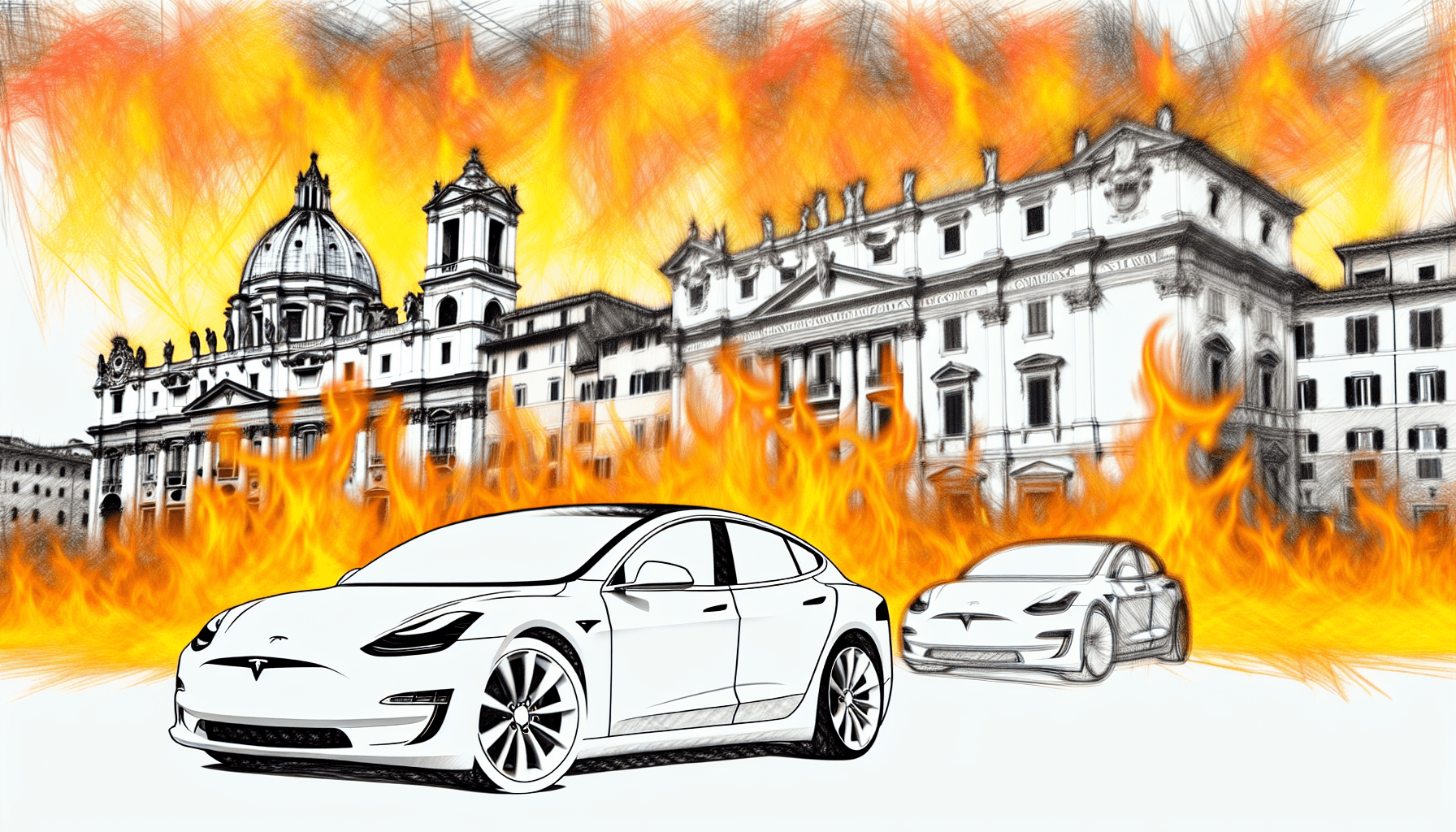
Tesla cars fire Rome 2025: What This Shocking Attack Reveals About Global Backlash
The Rome Tesla Fire: What Happened on March 31
On March 31, a shocking incident occurred in Rome that raised alarms in the electric vehicle community, specifically involving a Tesla car. As the evening descended, reports emerged of a Tesla vehicle engulfed in flames near a busy street, causing panic among onlookers. The incident attracted immediate attention not only due to the nature of the fire but also because it has brought to the forefront ongoing discussions about the safety of electric vehicles, notably those produced by Tesla.
Witnesses reported that the blaze erupted suddenly, with flames leaping high into the air and smoke billowing ominously against the night sky. Many were quick to record videos on their smartphones, sharing the shocking images on social media platforms, which further fueled discussions around the reliability and safety of electric vehicles. The rapid spread of news brought about a wave of reactions, ranging from outrage to concern among Tesla enthusiasts and skeptics alike.
As the fire department arrived at the scene, local authorities began investigating the circumstances surrounding the fire. Initial reports suggested that the vehicle was parked when it caught fire, which raised questions about potential electrical malfunctions—something that has been a concern regarding electric vehicles in general. It’s important to note that this important event occurred amid increasing scrutiny of electric vehicles worldwide, including Tesla’s model lineup.
This event could also be seen in the context of an ongoing backlash against electric vehicles, particularly due to the industry’s rapid growth and its perceived impact on traditional automotive markets. For many, especially in regions where gasoline vehicles dominate, electric cars have become a new focal point of contention, with arguments often centering around environmental benefits versus economic impacts.
Despite the outcry, it’s crucial to approach such incidents with a balanced perspective. Fires can happen to any vehicle and have been documented across various brands and types, including gas-powered cars. The conversations instigated by this incident, however, will likely have a lasting impact on how electric vehicles are perceived, especially Tesla’s cars in the European market.
As news outlets continue their coverage, the implications for Tesla’s efforts in Europe and beyond become increasingly significant. Regulatory bodies may take a closer look at safety standards for electric vehicles, potentially causing manufacturers to reevaluate their designs and practices. This fire incident in Rome could just be the tip of the iceberg, leading to more stringent oversight as safety becomes a priority in the automotive industry.
The global conversation around electric cars is evolving, and an incident like this underscores the importance of ongoing research and development in vehicle safety. For Tesla, which has positioned itself as a leader in the market, how they respond to incidents like the Rome Tesla fire will be pivotal in securing consumer trust and continuing their growth in a competitive and increasingly skeptical market.
As we dissect this incident, it becomes clear that the future of electric vehicles will not only depend on the technological advancements but also on public perception and the regulatory landscape. Community reactions will play a vital role in shaping future policies and the overall direction of electric vehicle adoption moving forward.
In conclusion, the Rome Tesla fire is not just a random incident; it sheds light on the broader concerns regarding electric vehicles and their place in modern society. As consumers grapple with these issues, the ultimate fate of electric cars is still being written.
Possible Motives Behind the Incident and Anti-Tesla Sentiment
When news broke that seventeen Tesla vehicles were destroyed by fire in Rome, the automotive world was thrown into turmoil. As more details began to emerge, questions regarding the potential motives behind this incident sparked widespread debate. Many people were drawn into a whirlwind of speculation, leaving many to wonder whether this was merely an unfortunate incident or something more sinister.
Growing Anti-Tesla Sentiment
It’s no secret that Tesla has faced increasing criticism over the years due to a range of issues, from their autopilot features to battery safety concerns. Some critics argue that the company has reached a point where it is no longer viewed as a champion of sustainable energy but rather as a polarizing figure in the automotive industry. This sentiment has undoubtedly contributed to the atmosphere in which this fire occurred. Perhaps onlookers might view this incident as a manifestation of underlying frustrations that many have toward the brand.
Potential Motives
The motives behind the incident can be assessed from various angles. First, there’s the possibility of a deliberate act aimed at discrediting the brand. Anti-Tesla activists may see arson as a way to bring more attention to their cause. This incident could serve as a catalyst for more public discourse around the perceived dangers associated with electric vehicles, particularly as electric cars gain more prominence on the roads.
Conversely, it could also be a representation of a passionate backlash against a brand that many once revered. Perhaps Tesla’s rapid rise has fostered jealousy or competition among traditional automobile manufacturers who see their market share at risk. For these manufacturers, damaging Tesla’s reputation could potentially serve their interests.
Conclusion
As we delve deeper into this incident, it’s crucial to approach the situation with an open mind. While Tesla has faced its share of challenges, this event raises important questions about how competitive dynamics interact with public opinion. Understanding the various motives behind such incidents might help us navigate the increasingly complex relationship between consumers, manufacturers, and the technology that drives our future.
Historical Context: Tesla Under Threat Across the Globe
In the ever-evolving world of automotive technology, one can’t help but notice the recent turmoil surrounding Tesla. The incident where seventeen Tesla vehicles were destroyed by fire in Rome has sparked a wave of scrutiny and concern. As we delve deeper into this matter, it’s crucial to understand not just the specific events, but also how they fit into the historical narrative of Tesla’s challenges worldwide.
Over the past few years, Tesla has firmly established itself as a leader in electric vehicles (EVs) and renewable energy solutions. However, this journey has not been without difficulties. As the market for EVs expands, so does the competition. Established automotive manufacturers are ramping up their efforts to incorporate electric models into their lineups, and new entrants are emerging with innovative designs and technologies. As a result, the global landscape for Tesla is becoming increasingly hostile.
In addition to market competition, concerns regarding safety, particularly related to battery fires, have come to the forefront. Many people are worried about the safety of electric vehicles, and incidents like the recent fire incident only compound these fears. As a result, anti-Tesla sentiment is brewing, leading to increasing calls for greater regulations and oversight in the EV space.
Furthermore, geopolitical factors are stirring the pot. Tesla’s operations in various countries are often influenced by local regulations, labor practices, and trade policies. These factors can create a complex web of challenges that the company must navigate. For example, in Europe, there are stringent emissions and environmental regulations that can place additional pressure on EV manufacturers. Failing to comply may not only harm Tesla’s image but also impact its sales significantly.
Click here for deeper insights on Tesla’s global challenges!
As challenges multiply, the question arises: how will Tesla adapt to these evolving circumstances? Will it maintain its position as a front-runner in the EV market, or will it be overshadowed by competitors? Only time will tell, but what remains clear is that the company must not only innovate technologically but also address growing public concerns to sustain its reputation and market share.
What the Rome Attack Means for Tesla’s Future in Europe
On March 31, 2025, a shocking incident occurred in Rome where seventeen Tesla vehicles were destroyed by fire. This event has raised significant concerns about Tesla’s future operations in Europe, particularly given the increasing scrutiny it’s facing globally. The unfolding situation highlights not just the challenges of vehicle safety but also the broader landscape of public sentiment toward the brand. As someone who closely follows automotive news and tech developments, I find this topic fascinating and alarming at the same time.
In the wake of the fire, discussions have intensified around what this means for Tesla’s brand reputation. Fire incidents involving electric vehicles are not unheard of, but the visibility and impact of such events can significantly sway public opinion and consumer confidence. This specific incident in Rome acts as a catalyst for a surely larger debate on safety standards, regulatory oversight, and how Tesla will adapt its strategies to maintain its stronghold in the electric vehicle market amidst rising skepticism.
From an operational perspective, Tesla has thrived by presenting itself as an innovative leader in the electric vehicle industry. However, events like the Rome attack create an urgent need for Tesla to respond swiftly and effectively. The company may need to reassess its risk management protocols and improve communication strategies in order to mitigate backlash. The broader European market, which is critical for Tesla’s growth, may become more volatile if such incidents aren’t addressed properly and transparently.
Furthermore, it’s essential to consider how this incident reflects existing tensions between conventional automotive manufacturers and electric vehicle companies. With a growing trend toward sustainability, Tesla has positioned itself at the forefront of this shift. Nevertheless, incidents like these can be used by competitors to question Tesla’s reliability and safety records. The long-term impact on Tesla’s market share in Europe may hinge on their ability to navigate this firestorm effectively. With electric vehicles being at the heart of global environmental initiatives, maintaining public trust is crucial, especially in a competitive landscape where alternatives are increasingly becoming viable options.