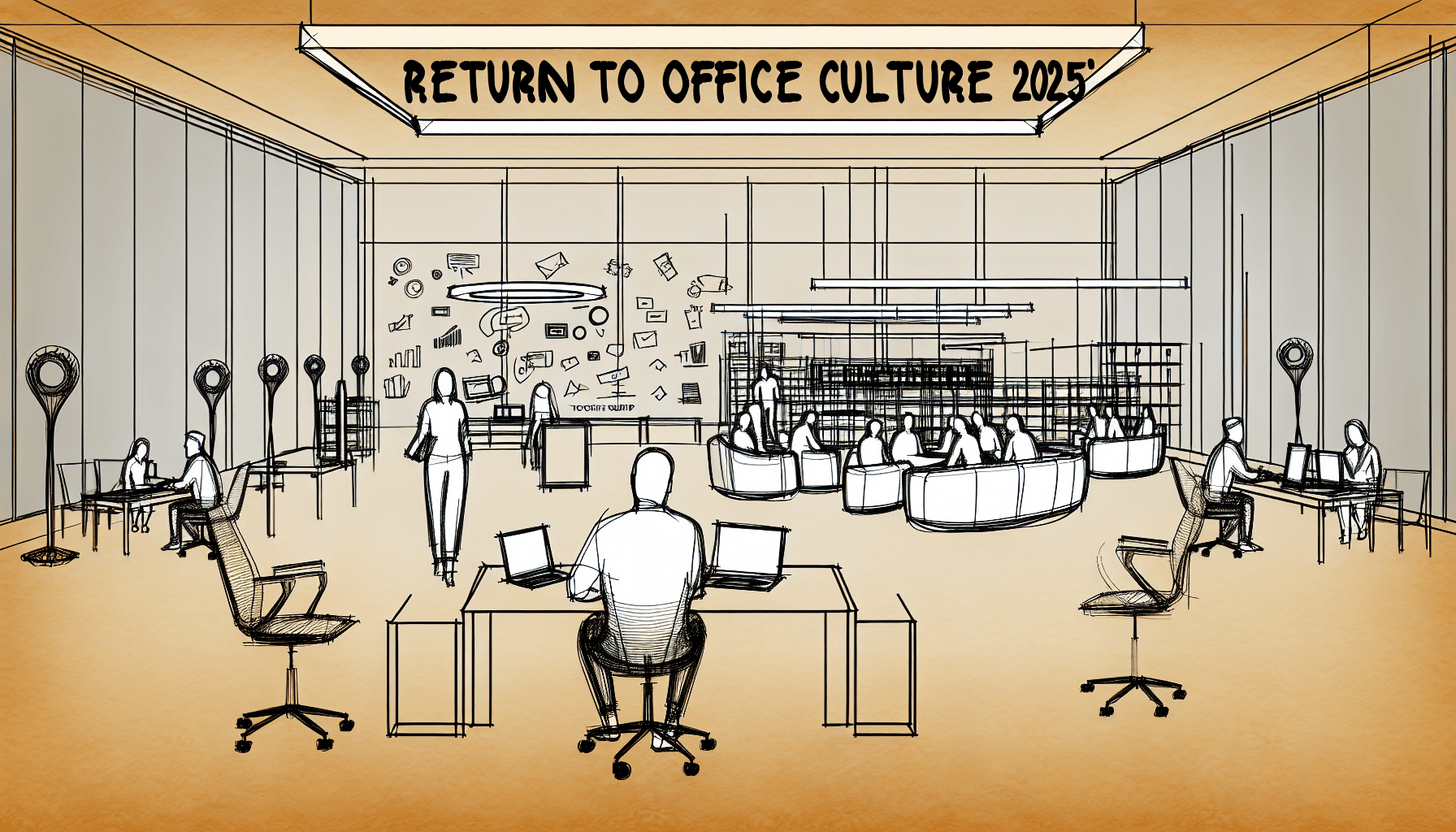
Return to Office Culture 2025: Why AI and Communication Strategies Will Shape the Future Workplace
Understanding the 2025 RTO Landscape through EY Workplace Index
As we step into 2025, the landscape of Return to Office (RTO) culture has transformed remarkably, especially in the wake of the pandemic. Organizations across the globe are grappling with the newly coined term, Return to Office Culture 2025. This paradigm shift is significantly influenced by various factors, including changes in employee expectations, technological advancements, and workplace design.
Analyzing the EY Workplace Index gives us crucial insights into how organizations are navigating these shifts. The index reflects the diverse expectations of employees, who now prioritize flexibility, wellness, and collaboration more than ever. Interestingly, a considerable gap exists between how leaders perceive these needs and how employees express them. This gap creates what we refer to as strategic tension within organizations, revealing the complexities involved in establishing an efficient RTO strategy.
Organizations are realizing that to attract and retain talent, they need to adapt their RTO policies to align more closely with employee desires. There’s a growing need for transparency and communication regarding office policies, which in turn builds trust and engagement. Companies investing in comprehensive surveys and feedback mechanisms find that they can mitigate misunderstandings and establish a culture that resonates with both workforce and management.
Technological adaptation plays a pivotal role in this transition as well. AI is being integrated into workplace operations, providing support for everything from managing workspace occupancy to enhancing productivity through smart systems. This transformation is not merely about technology; it’s about reimagining how we perceive office spaces. Consider it a redesign phase where functionalities meet aesthetics, creating an environment that nurtures creativity and collaboration.
Conclusion
To sum up, the insights gathered from the EY Workplace Index indicate a promising yet complex road ahead for RTO culture. Embracing flexibility, staying attuned to employee sentiments, and harnessing AI technologies will be crucial for organizations aiming to create a workplace that not only attracts talent but also fosters a thriving culture.
In the future, it’s plausible that the office will evolve from a rigid space to a dynamic environment where employees can thrive—ultimately redefining what it means to return to work.
How Employee Perceptions vs. Leadership Views Drive Strategic Tension
The dynamics of the workplace have transformed significantly in the wake of the COVID-19 pandemic, particularly as organizations navigate the complexities of return-to-office (RTO) policies in 2025. The strategic tension often lies between employee perceptions and leadership views. Employees desire flexibility and autonomy, which has become paramount to their overall job satisfaction and productivity. However, leaders, often focused on maximizing productivity and innovation, may push for a more traditional RTO approach that can generate friction. Understanding this tension is critical for developing an effective workplace strategy.
Employees’ Desire for Flexibility
As we delve deeper into 2025, it’s becoming increasingly clear that employees are seeking more flexible work arrangements. The newfound remote working experience has conveyed a strong message: people can be productive outside the traditional office space. This flexibility not only aids in enhancing work-life balance but also caters to various personal needs. In fact, a recent survey indicated that over 75% of employees prefer hybrid working environments, suggesting that the future of office space must adapt to these evolving preferences. However, leaders may have a divergent view, believing that in-person collaboration fosters greater innovation and engagement. This dichotomy creates a challenge for organizations as they attempt to align their RTO policies with the actual needs and wants of their workforce.
Leadership’s Focus on Productivity
On the flip side, leadership often feels the pressure to maintain productivity levels and drive organizational growth. There’s a belief among many leaders that returning to the office can significantly boost productivity by fostering teamwork and creativity. The physical office space is seen as a collaborative hub where spontaneous discussions and interactions can lead to serendipitous ideas. This perspective, while understandable, occasionally neglects the valid points raised by employees. The push for a strict RTO policy can also lead to feelings of distrust among workers, creating an environment where they feel compelled to return to the office rather than motivated. This tension between productivity expectations and employee satisfaction underlines the importance of open dialogue and effective communication strategies.
Aligning Perspectives for a Cohesive Strategy
To resolve this ongoing tension, organizations must strive to bridge the gap between employee perceptions and leadership views. Regular surveys and feedback mechanisms can provide valuable insight into employee sentiments regarding RTO policies. Moreover, leaders should take the time to explain the rationale behind decisions, fostering an environment of transparency. This approach not only helps in building trust but also allows employees to feel like their voices are heard. Establishing a culture where employees and leaders can share their concerns and suggestions openly is key to developing RTO policies that satisfy both parties. In this evolving landscape, it’s essential for companies to recognize that adaptability and collaboration are critical for long-term success.
In conclusion, the conversation surrounding RTO in 2025 is fundamentally about understanding and navigating the delicate balance between employee needs and leadership expectations. By acknowledging the fundamental differences in perspective and working collaboratively towards a cohesive strategy, organizations can successfully foster a productive, satisfying work environment that caters to the demands of the modern workforce. In a world where change is the only constant, adaptability will be the cornerstone of any thriving workplace culture.
The Role of AI in Reimagining Office Spaces Post-Pandemic
As we step into a new era of work, the Return to Office Culture 2025 is becoming a prominent topic among businesses worldwide. It’s fascinating to observe how companies are re-evaluating their workplace strategies post-pandemic. The discussions around returning to office spaces are heavily intertwined with both productivity debates and the rise of technological innovations, especially AI.
The pandemic has been a major catalyst for change, pushing companies to adopt remote work on an unprecedented scale. However, as we transition into 2025, many organizations are debating the effectiveness of hybrid work models versus traditional office environments. AI plays a crucial role in this dialogue. In the next few years, AI tools are expected to streamline workflows, enhance decision-making, and improve employee engagement within office spaces. Imagine AI systems that analyze employee productivity patterns and tailor working environments for optimal performance!
This transformation isn’t just about boosting efficiency; it’s also about creating workspaces that reflect the evolving needs of employees. As we move forward, we need to consider how to structure return-to-office (RTO) plans that align with organizational culture and the personal needs of employees. It’s about fostering a work environment that is not only productive but also inclusive and flexible.
To sum it up, the role of AI in reimagining our office spaces could redefine how we perceive the workplace in the coming years. As technological advancements continue to evolve, integrating AI into daily operations will be paramount for any organization aiming for sustained growth and flexibility. Embracing this AI-driven transformation can lead to a more adaptive and responsive working environment—where employee needs, productivity, and innovation converge harmoniously.
Building a Transparent RTO Communication Strategy That Lasts
As we look forward to 2025, many organizations are grappling with how to transition their employees back to the office effectively. The Return to Office Culture 2025 is not just about logistics; it is deeply rooted in the company culture and employee needs. Hence, it’s essential to develop a transparent return-to-office communication strategy that resonates with employees and aligns with the evolving workplace landscape.
Understanding Employee Needs
Effective communication strategies should begin with understanding the needs and concerns of employees. It’s crucial to consider their experiences and perceptions when transitioning back to the office. To achieve this, companies can:
Developing Clear Messaging
After gathering insights from employees, the next step is to create clear messaging around the return-to-office policies.Clarity and transparency in messaging will help alleviate anxiety and foster trust between company leadership and employees. Therefore, the communication strategy should encompass:
- Clear timelines for when employees are expected to return.
- Detailed descriptions of safety protocols and adjustments made to the office space.
- Open lines of communication where questions and concerns can be addressed without hesitation.
Response and Adaptability
The need for adaptability cannot be overstated as companies transition to the Return to Office Culture 2025. Communication should allow for continuous feedback and adjustments as employees share their experiences. Given that some might feel uneasy about returning, it is imperative that organizations remain open to modifying haste decisions based on collective feedback. This will not only help in smoothing the transition but also reinforce a culture of responsiveness and care.
Key Takeaway: Always keep communication open, transparent, and flexible, ensuring that you foster a supportive environment for your employees.
Conclusion
In crafting a successful return-to-office communication strategy, understanding employee needs, developing clear messaging, and being adaptable will be paramount. Each component will contribute to a positive transition for both employees and management alike. As we navigate these uncharted waters, embracing the importance of communication can set your workplace culture apart as more collaborative and supportive.
Q&A
How can leaders ensure smooth communication during the RTO process?
Open dialogue, regular check-ins, and adapting to feedback throughout the transition will be crucial for leaders to ensure smooth communication.
What are some best practices for adapting communication plans?
Best practices involve continuous assessment of employee feedback, being transparent about changes and adjustments, and providing consistent updates.