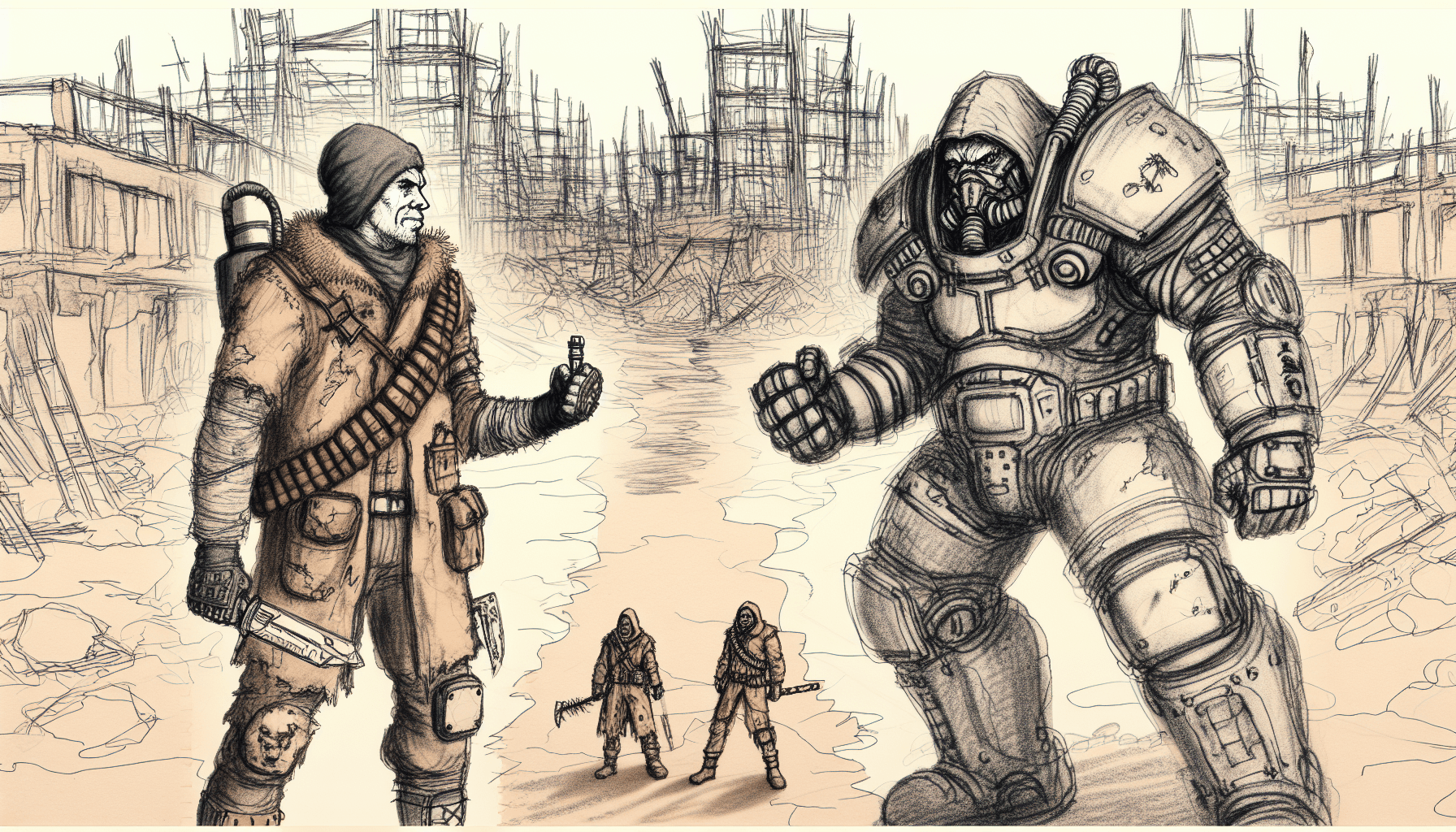
The Last of Us vs Big Daddy: Why Joel and Sonny Share More Than You Think
How ‘The Last of Us’ Redefined the Apocalyptic Genre
In the realm of pop culture, ‘The Last of Us’ redefined the apocalyptic genre. It wasn’t merely about survival in a devastated world, but delved deep into the human experience amidst chaos. The game’s narrative had players grappling with moral dilemmas, evoking emotions that many hadn’t experienced in prior apocalyptic media. Unlike traditional zombie narratives that primarily focused on the threat of the undead, this game emphasized the bonds formed between survivors. It transformed the genre into a reflective commentary about humanity, loss, and love.
Through the lens of Joel and Ellie, we see how the apocalypse amplifies human emotions. Joel’s transformation from a hardened survivor to a devoted father figure reflects a deeper understanding of love and loss. The game’s storytelling felt more like an emotional journey than a simple survival game. You weren’t just a player; you were part of their world, sharing in their pain and, occasionally, their joy.
Moreover, the haunting visuals and immersive gameplay were complemented by a captivating soundtrack that added depth to the narrative. The game’s setting, from abandoned cities to overgrown landscapes, painted a vivid picture of a world reclaimed by nature. This attention to detail reminded players that even in despair, beauty can be found.
In a world inundated with apocalyptic tales, ‘The Last of Us’ stood out by prioritizing character development over mere action. It made us question our choices and the lengths we would go to protect those we love. One could argue that it paved the way for more nuanced narratives in the genre, inspiring creators to explore emotional depths rather than solely focusing on survival tactics.
“The Last of Us isn’t just about surviving; it’s about living and loving in the face of unimaginable odds.”
The Last of Us pushed the boundaries of storytelling in the gaming industry, making it a memorable experience that not only entertained but also made us think about our definitions of humanity.
Why Joel Miller’s Fatherhood Mirrors Sonny Koufax
When you think of post-apocalyptic worlds, the last thing that probably comes to mind is the theme of fatherhood. Yet, when we look at Joel from The Last of Us and Sonny from Big Daddy, a surprising emotional connection emerges between these two characters. Both of them, albeit through vastly different circumstances, demonstrate what it means to care for someone else. They reveal this hidden tenderness in the context of very different settings.
Joel, a survivor in a world devastated by fungal infection, is a man driven by the need to protect Ellie, the young girl he took under his wing. He has gone through unimaginable loss and hardship, making his bond with Ellie not just a matter of survival but a desperate need for connection. In a way, he becomes a father figure—a role he struggles with due to his painful past but ultimately embraces as their relationship deepens. On the flip side, Sonny, portrayed by Adam Sandler, unexpectedly transforms from a carefree bachelor into a father overnight. Despite being completely unprepared, he embraces the role with warmth and humor, providing a loving home for Julian. Even in their vastly different scenarios, both characters show us that fatherhood is not always about biological ties; it’s about love, responsibility, and the lengths one will go to protect those they care about.
The Importance of Emotional Vulnerability
Both Joel and Sonny exhibit emotional vulnerability, bonding with their respective children in profound ways. Joel’s journey is characterized by his initial resistance to the emotional connection with Ellie. He has shut himself off after losing his own daughter, yet as their bond grows, so does his capacity to love again. He fights tooth and nail for Ellie, not just as a means of survival, but as a way to heal his own wounds through the act of loving. His emotional growth is essential to the narrative, showing that even the hardest of hearts can open up.
On the other hand, Sonny represents a more comedic yet equally touching angle of fatherhood. He learns to navigate parenting’s ups and downs while maintaining his quirky charm. His character shows us that humor can coexist with depth; it helps to ease the pressure that comes with such enormous responsibility. By facing challenges head-on and embracing his role, he embodies the notion that being a parent involves a continual cycle of learning and growth.
Exploring Joel’s and Sonny’s journeys allows us to understand that fatherhood is multifaceted. It challenges traditional notions, offering layers of human experiences that resonate with audiences regardless of the genre they love. By reflecting on both stories, we can appreciate the emotional depth each character brings to their respective narratives.
While some may say that The Last of Us is a stark contrast to Big Daddy, they both weave emotional threads into their distinct tapestries. Through Joel and Sonny, we learn essential lessons about humanity, love, and the evolution of relationships. They exemplify how two characters from drastically different worlds can share a common bond that transcends their circumstances, leaving us to ponder the true essence of fatherhood in all its forms.
Emotional Parallels Between Ellie and Julian
When we think about Ellie from The Last of Us and Julian from Big Daddy, it’s easy to dismiss them as just characters in very different stories. However, if we look a little deeper, we uncover emotional connections that might not be apparent at first glance. Both characters face immense challenges in their respective worlds, and the way they navigate their relationships is profoundly touching, highlighting human connections even in dire circumstances.
Ellie is a young girl thrust into a post-apocalyptic world, where survival is the only thing that matters. She has lost so much—her innocence, her friends, and at times, even her hope. But it is through her relationship with Joel that we see her vulnerable side emerge. Similarly, Julian, although sheltered and seemingly carefree, grapples with the complexities of familial relationships, particularly through his interactions with Sonny. Julian’s childlike wonder and innocence are put to the test as he learns about love and responsibility, albeit in a lighter, more comedic setting than Ellie.
These connections remind us that whether in a grim world riddled with danger or in a comedic take on adult responsibilities, what truly binds us together are our emotional responses. **Both Ellie and Julian represent the power of human connection**—a theme that transcends genre and setting. By exploring their lives, we learn that love, care, and understanding are essential, even amid chaos. It’s a profound lesson: no matter our circumstances, our relationships can give us strength and purpose, allowing us to navigate even the toughest of challenges.
What This Unexpected Comparison Teaches Us About Humanity
When we think of Joel from The Last of Us and Sonny from Big Daddy, our minds might not immediately connect the two characters. On the surface, they seem to inhabit entirely different worlds. One is a hardened survivor in a post-apocalyptic landscape, while the other is a carefree man-child navigating the peculiar responsibilities of fatherhood. But what if I told you that beneath these stark contrasts, both characters represent profound themes of humanity, love, and the desire for connection? In exploring this unexpected comparison, we unveil layers that might change how we perceive both characters.
Joel, tasked with protecting Ellie in a ravaged world, embodies the essence of a father’s love, albeit one forged in the fires of loss and survival. His relationship with Ellie isn’t just about protecting her from external dangers; it reflects a deeper emotional struggle. Similarly, Sonny, despite his immaturity, grows into his role as a father figure for Julian, discovering the meaning of responsibility, love, and devotion. This juxtaposition teaches us that love, in its many forms, can manifest in the most unexpected situations.
Both characters, in their respective narratives, reveal the complexity of human emotions. Joel, grappling with guilt and loss, and Sonny, battling his own journey of self-discovery, remind us that vulnerability is not a sign of weakness, but rather a fundamental aspect of being human. Their stories illustrate that transformation often arises out of challenging circumstances, leading to deeper connections with others. Ironically, the harsh realities they face ultimately push them toward emotional growth, enriching their relationships and understanding of what it means to care for another individual.
This reflection leads us to ponder: can we all relate to their experiences in some way? In a world that often tries to define masculinity and emotion rigidly, both Joel and Sonny embody the idea that a strong character isn’t void of feelings but is instead marked by their ability to empathize, evolve, and nurture connections with those they love. As we navigate this increasingly isolating world, perhaps it’s time we embrace the lessons from both characters and recognize that the core of humanity lies in our capacity for love and understanding, regardless of the circumstances we find ourselves in.