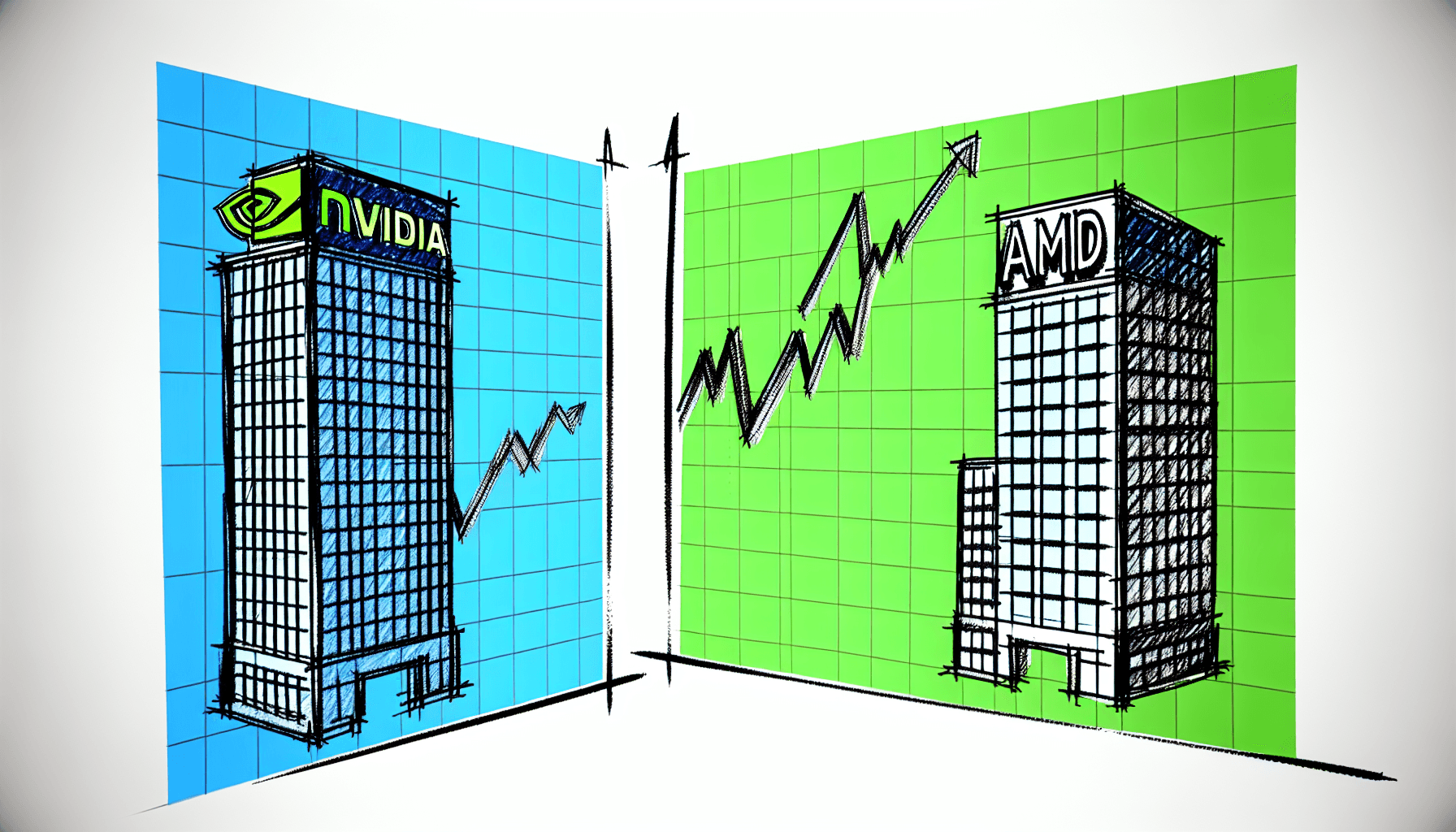
Nvidia vs AMD AI Stocks: Which Has the Edge in 2025?
Understanding the 2025 AI Stock Landscape
As we look towards the future, particularly to 2025, the landscape of AI stocks presents an intriguing puzzle that many investors want to solve. AI technologies are expected to revolutionize various industries, from healthcare to entertainment, and the companies at the forefront of this revolution are making significant plays in the stock market. Among these, Nvidia and AMD stand out as leading contenders in the AI stock race, driving innovations and significantly influencing market dynamics.
Nvidia, a giant in the GPU market, has seen its stock surge thanks to the booming demand for artificial intelligence and machine learning applications. The company’s focus on high-performance computing and data centers has positioned it as a leader in AI adoption. Nvidia’s technology is pivotal to many AI infrastructures, making it a hot favorite among investors.
On the other side, we have AMD, which has been gaining its ground with the development of its own AI-driven solutions and the release of competitive graphics processing units. Although it remains behind Nvidia in market dominance, AMD is pushing aggressively with innovative hardware and partnerships that could reshape its future and, ultimately, its stock performance.
In analyzing the financial performance of Nvidia and AMD, it becomes clear that while Nvidia holds a strong lead in current power, AMD’s potential should not be overlooked. The competitive landscape can shift rapidly in tech, and AMD’s investments in AI could pay off significantly in the coming years as the technology matures and scales across various industries.
Overall, the 2025 AI stock landscape indicates a fiercely competitive environment. Investors will have to weigh options carefully, keeping an eye on Nvidia’s established power against AMD’s budding potential. Therefore, knowing key indicators and future growth prospects is essential in making savvy investment decisions.
While some argue that Nvidia might be the safest bet, others believe that AMD’s upward trajectory could lead to more substantial gains over the long term if they can capitalize on their investments wisely.
In conclusion, as we progress through 2025, witnessing advancements in AI will undoubtedly influence stock performance. Investors should remain informed and adaptable, understanding that both Nvidia and AMD offer unique advantages in this ever-evolving landscape. The ultimate question remains: Which stock will rise to the forefront as AI continues to dominate our technological horizon?
Financial Performance: Nvidia’s Power vs AMD’s Potential
The competition between Nvidia and AMD in the AI chip sector has become a significant point of discussion among investors and tech enthusiasts alike. Nvidia has built a reputation as a powerhouse in the AI market, primarily due to its cutting-edge graphics processing units (GPUs) that are widely used in machine learning and deep learning applications. Interestingly, Nvidia’s financial performance is often showcased as a benchmark against which other companies, such as AMD, are measured.
According to recent reports, Nvidia’s revenue reached a staggering $26.9 billion in 2022, with a considerable portion derived from AI-related products. The company has consistently delivered robust profit margins, thanks in part to its ability to innovate and maintain a technological edge over competitors. In this context, it is essential to consider whether AMD can keep up. AMD’s financials reflect its growth within the market, although its revenue of around $16.4 billion is significantly lower than Nvidia’s. However, with the potential of its upcoming chips and adaptive technologies, many experts argue that AMD could close the gap.
Revenue Growth
Despite its lower revenue, AMD’s ability to grow faster has caught the attention of many investors. With year-on-year growth rates exceeding those of Nvidia in segments like Ryzen processors and Radeon graphics cards, AMD is perceived as a company with potential upside. Nvidia vs AMD AI stocks have garnered extensive attention, and both companies are navigating through an era of rapid technological advancement.
“In the next few years, the competition between Nvidia and AMD is likely to intensify as both strive to dominate the growing AI market. Gauging their financial performance is essential to make informed investment decisions.”
Nonetheless, Nvidia’s power in the market cannot be discounted. Its entry into AI-driven sectors has set a high standard, making it tougher for AMD to capture market share. Let’s not forget that Nvidia’s investment in AI startups and their expansion into software provides them with a unique edge. Meanwhile, AMD is focusing on developing more versatile chips that can offer comparable performance at competitive prices.
Market Position and Stock Valuation
The stock market has reacted to these circumstances with fluctuations, making it crucial for prospective investors to analyze both companies thoroughly. While Nvidia’s stock shows a lower price-to-earnings (P/E) ratio compared to its historical average, many analysts believe that AMD presents an attractive alternative. In evaluating the financial landscape, establishing the right trajectories for each company moving into 2025 is becoming increasingly important.
Ultimately, both Nvidia and AMD have unique strengths and challenges ahead of them. Investors must weigh Nvidia’s stability and massive revenue against AMD’s promising growth potential.
Future Growth Prospects and AI Market Leadership
The race for supremacy in the AI chip sector is heating up with two major players vying for dominance: Nvidia and AMD. These companies are at the forefront of technological advancement, but as we head deeper into 2025, the question arises: who will emerge as the leader in the rapidly expanding AI market? Both Nvidia and AMD bring unique strengths to the table, yet their paths are marked by different strategic decisions and market approaches.
Nvidia is known for its groundbreaking graphics processing units (GPUs) which are now integral to AI tasks. The company has invested heavily in deep learning technologies and has developed a comprehensive ecosystem that supports developers and researchers in their AI endeavors. In contrast, AMD is not to be underestimated, as it has made significant strides in recent years with its own line of GPUs and processors tailored for AI applications. The launch of AMD’s RDNA 3 architecture has enhanced its competitiveness against Nvidia, providing powerful alternatives for data centers and cloud service providers.
Investors are keenly watching how these companies will adapt to the evolving landscape of AI and machine learning. Both firms exhibit remarkable financials, but their valuations tell different stories. Nvidia commands a higher market cap due to its strong market position and consistent innovation, while AMD continues to grow its share, representing a potentially undervalued investment opportunity. As we analyze the projected growth rates, particularly in sectors like autonomous vehicles, data centers, and consumer electronics, it’s crucial to consider how Nvidia and AMD will solidify their roles in shaping the future of AI technology.
Final Verdict: Choosing the Right Stock for Long-Term Gains
When it comes to investing in the AI chip sector, the battle between Nvidia and AMD is significant. Both companies have their strengths, but making the right choice for long-term gains depends upon several factors. Let’s dive into some considerations that can help you understand which stock might be the best fit for you in the evolving landscape of AI technology.
With Nvidia’s dominance in the graphics processing unit (GPU) market and its strong foothold in AI technologies, many might argue in favor of investing in Nvidia for its perceived stability and growth. However, it would be wise not to overlook AMD, which has been rapidly expanding its market share and technological capabilities. Consider the following points:
These items are critical for determining long-term investment viability. Companies like Nvidia with an established history may offer a sense of security, but AMD’s potential for growth in AI applications is equally compelling. Often, the lesser-known options can provide the greatest returns over time as they innovate to take market share from industry leaders.
Ultimately, your choice may come down to your risk tolerance and investment strategy. If you prefer a more conservative approach, Nvidia might suit your needs better. Conversely, if you’re looking to include some risk for the potential of higher returns, AMD could be the right fit for you. It has continually challenged its competitors and has shown promising growth metrics, which you should consider when reviewing your portfolio.
Nvidia vs AMD AI Stocks: Which Has the Edge in 2025?
What should investors consider when choosing between AMD and Nvidia for AI stocks?
Investors should assess the companies’ financial health, product pipelines, and the overall market landscape surrounding AI technology. Keeping an open mind regarding potential changes in the industry can help make the right investment choice.
For long-term gains, which stock appears more favorable
While both companies are working on innovative projects, AMD’s growth rate in emerging markets could potentially elevate its status over Nvidia. However, Nvidia’s established market dominance offers security for long-term investors. Always conduct thorough research and consider diversifying investments to minimize risks.
#Nvidia,#AMD,#AIStocks,#Investment,#LongTermGains