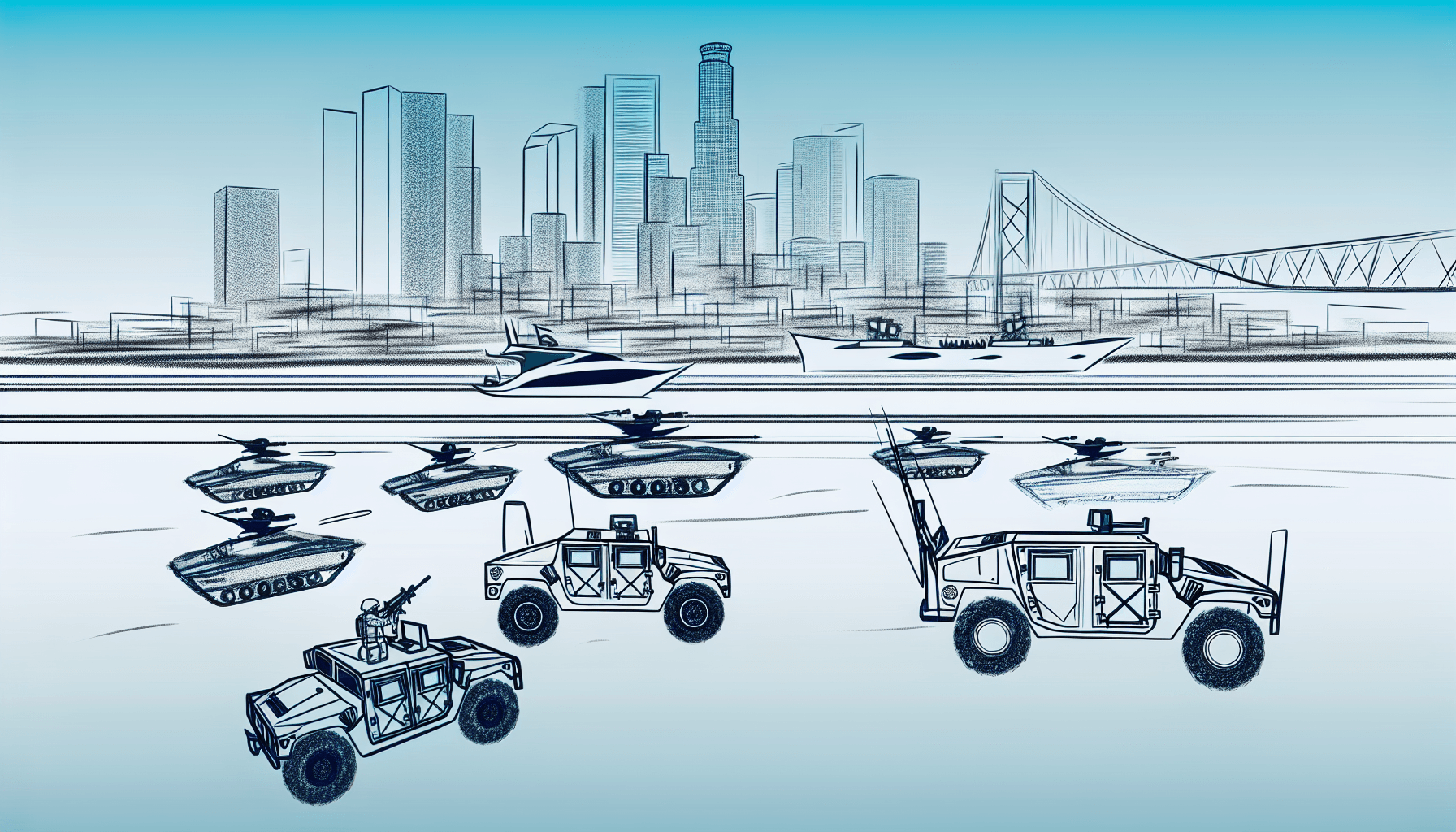
National Guard Deployment Los Angeles 2025: What Really Triggered the Chaos?
Unraveling the Federal Decision Over State Authority
In recent years, the interplay between federal and state authority has been a contentious issue, particularly highlighted by events such as the proposed National Guard deployment in Los Angeles in 2025 amid escalating civil unrest. The decision to deploy the National Guard often stirs significant debate regarding the limits of federal power and the rights of states to exert their sovereignty.
Understanding this dynamic is crucial, as it shapes not only governance but also the public’s perception of authority and trust in governmental institutions.
The deployment of the National Guard is typically justified as a measure to restore order during times of crisis; however, it raises important questions. When does federal intervention become necessary, and when does it infringe upon state rights? The complexities of this situation are further aggravated by divergent opinions among political leaders and the public regarding the role of military intervention in civilian affairs.
Many citizens perceive military presence as a public safety measure, an assurance that the government is taking swift action to protect its people. On the other hand, others view it as a tacit admission of failure by local law enforcement, suggesting that the government cannot maintain order without resorting to military power. This duality breeds mistrust and heightens tensions during protests or civil disobedience.
Furthermore, federal facilities often bypass local governance structures, leading to a feeling of alienation among local communities who see decisions being made without their input.
Examining case studies from past incidents where the National Guard has been deployed reveals a trend of mixed outcomes. In some instances, such as during the 1992 Los Angeles riots, the presence of the National Guard helped quell violence and restore order. Yet, in others, it has led to escalated tensions and confrontations, leaving communities divided and unresolved grievances simmering beneath the surface.
The deployment of the National Guard is a double-edged sword, often seen as necessary for safety, yet simultaneously a source of historic conflict between state and federal powers.
The balance between maintaining law and order and respecting state sovereignty will continue to be a pivotal issue, particularly as we look towards the future. As tensions rise, finding a solution that satisfies both state rights advocates and proponents of federal intervention will require comprehensive dialogue and cooperation. Ultimately, the goal should be to ensure that all voices are heard and respected, promoting a more unified approach to governance in addressing civil unrest.
In conclusion, as we navigate the complexities of public safety and governmental authority, the conversations surrounding the National Guard deployment in Los Angeles in 2025 will surely serve as a critical historical reference point. The ongoing struggle to balance state and federal power illustrates the ever-evolving dialogue about governance in America.
Inside the Streets: What Protesters and Police Faced
The deployment of the National Guard to Los Angeles in 2025 ignited a fierce wave of protests, leading to confrontations that echoed across the city streets. As individuals gathered to voice their concerns, tensions rose, sparking chaos that affected not only the demonstrators but also the police tasked with maintaining order. Streets that were once places of community became battlegrounds as differing ideologies clashed, each side determined to be heard.
The Atmosphere of the Protests
Amid rioting and protest, one can hear the pulse of frustration and voicing of demands for justice. Many protesters wore masks, not just for safety but to symbolize the loss of their identity amidst systemic anonymity. There were signs of unity, passion, and anger against perceived injustices, galvanizing many outsiders to join the fight. The chaotic scenes unfold—police dressed in tactical gear, prepared for escalation, while young activists stood firm, chanting slogans of social reform.
Police Response and Challenges
The law enforcement officers faced a multitude of challenges while trying to control the expanding chaos. Each engagement resulted in questions about policing tactics and the appropriateness of their responses to activists demanding change. Many officers struggled to balance their duty to uphold the law while grappling with the ethical implications of their actions amid waves of anger. Unfortunately, this often resulted in violent confrontations that led to injuries on both sides, leading to a vicious cycle that escalated tensions further.
The Outcomes and Reflections
After the smoke cleared, the aftermath left a significant impact on the city of Los Angeles. Community leaders called for dialogues, urging both sides to step back from the brink and reflect on the reasons behind the unrest. The events forced a critical examination of not only local policing but also systemic issues within California’s sociopolitical landscape. Moreover, the psychological scars inflicted on both police and protesters served as a stark reminder of the cost of unresolved conflicts. Those who took to the streets reiterated the necessity for sustained advocacy and engagement, stressing that their fight was far from over.
Political Fallout: California vs. Trump Administration
In 2025, the deployment of the National Guard to Los Angeles sent shockwaves through California’s political landscape. The decision raised numerous questions about state versus federal authority, particularly as tensions between California and the Trump administration continued to escalate. The situation didn’t just stir up anger among local politicians but also created a divide among everyday citizens. Many residents were driven to protest, believing that federal intervention was unnecessary and even a violation of their rights. The move seemed to many as an affront to California’s autonomy, leading to widespread demonstrations across the state.
Following the deployment, claims of overreach and mismanagement flooded the media. Local government officials expressed their frustrations over not being consulted, suggesting that this action disregarded the needs and wishes of California residents. In a bizarre twist, Republicans portrayed the deployment as a necessary measure for maintaining order and safety in the wake of rising unrest. Meanwhile, Democrats labeled it a politically motivated move aimed at undermining the state’s progressive policies.
Ultimately, the aftermath of the National Guard’s presence in Los Angeles highlighted not only the fraught relations between federal and state governments but also the implications of civil unrest in a democratic society. As citizens grappled with questions of authority, freedom, and the role of government, many began to recognize that this conflict was more than a political issue; it was a societal challenge that could redefine what it means to live in a democracy.
Where Are We Heading? Civil Unrest and Constitutional Questions
In recent years, we have witnessed a significant rise in civil unrest across various locations, and the events that unfolded in Los Angeles during the National Guard deployment in 2025 serve as a focal point for examining the underlying factors contributing to this turbulence. But what is driving this unrest, and where are we heading as a society?
First and foremost, the deployment of the National Guard in Los Angeles raised serious questions about the boundaries of state authority and federal intervention. Historically, similar military deployments have often been met with mixed reactions from the public. On one hand, some citizens welcome the action, seeing it as a necessary response to overwhelming chaos and a demand for safety. On the other hand, many view it as a gross overreach of federal power and a violation of state sovereignty. This dichotomy of perspectives can heighten tensions between residents and law enforcement, further complicating the situation.
Additionally, social media plays a pivotal role in amplifying dissent and mobilizing protest actions. The ease of sharing information—be it factual or misleading—can rapidly escalate a localized issue into a widespread rallying cry. For instance, viral videos depicting incidents of police brutality or alleged misconduct can serve as catalysts for protests, impelling individuals to take to the streets and express their frustrations. Consequently, these digital platforms can lead to a cycle of protest and repression, as authorities attempt to maintain order amidst growing unrest.
Moreover, the political landscape surrounding these events significantly influences public perception. In the case of 2025, tensions between California leaders and the Trump administration established a backdrop of animosity, which may have exacerbated the unrest. Many citizens felt that their voices were stifled by federal policies that did not take their needs or opinions into account. This disconnect fosters a sense of alienation among the population, which can breed further discontent and civil unrest in the long term.
National Guard Deployment Los Angeles 2025: What Really Triggered the Chaos?
The chaos was primarily triggered by a culmination of social tensions, political factors, and the perceived overreach of federal authority in response to local unrest. Residents felt their autonomy was compromised, leading to widespread protests.
How can the situation improve in the future?
To foster a better environment, it is crucial for leaders to engage with communities, acknowledge their grievances, and work towards inclusive solutions that respect both state and federal jurisdictions. Building trust is essential to mitigating future unrest.
In conclusion, as we move forward, we must reflect on the lessons learned from the National Guard deployment in Los Angeles. By understanding the factors that lead to civil unrest, we can work towards developing mechanisms that encourage dialogue, promote understanding, and ultimately prevent the escalation of tensions in our communities. The road ahead may be challenging, but through collective effort and civic engagement, we can strive for a more peaceful and harmonious society.
#CivilUnrest, #ConstitutionalQuestions, #NationalGuardDeployment, #LosAngeles2025, #PublicSafety