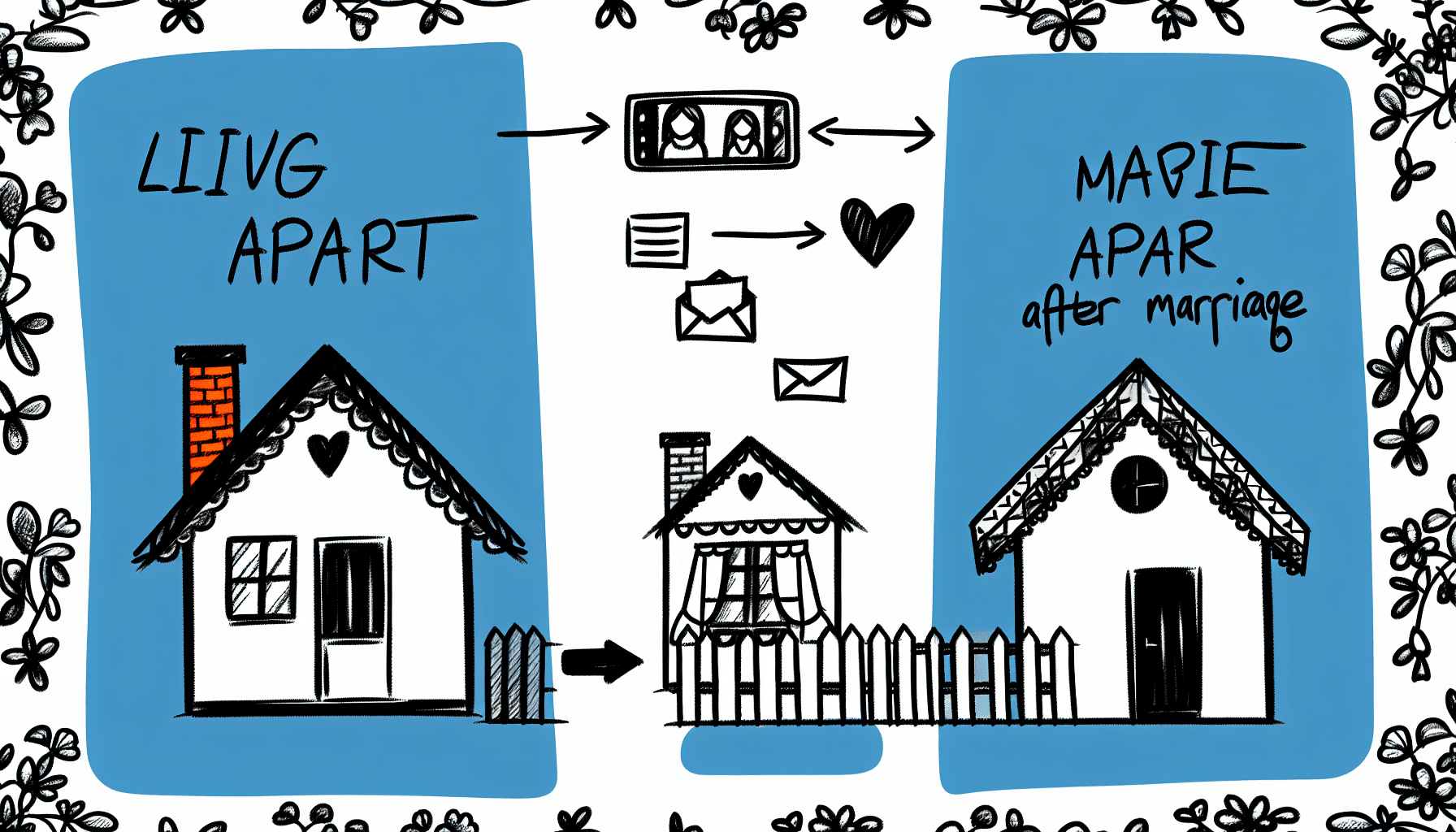
Living Apart After Marriage: Why More Couples Are Choosing Space Over Tradition
The Rise of Living-Apart-Together Relationships
In recent years, a trend has emerged in modern relationships that challenges traditional norms. Many couples, after tying the knot, are choosing to live apart after marriage, opting to maintain individual residences instead of cohabitating. This phenomenon, often termed “living-apart-together” (LAT) relationships, provides a unique perspective on love, independence, and partnership.
The idea of LAT relationships brings forth the concept of personal space being equally essential as being together. Imagine the freedom of being in a committed relationship, yet having the personal space to pursue your own hobbies, interests, and even friendships. Such arrangements allow couples to enjoy the bliss of companionship while keeping their individual lives intact.
According to a study by the , up to 20% of married couples in urban areas are now opting for this lifestyle. The benefits are numerous, including reduced stress related to shared living, preserved autonomy, and, ironically, a deeper emotional connection. In a world where everything seems to be moving in a default direction toward cohabitation, LAT couples are challenging conventional wisdom and opting for a more personalized approach to love.
Many might wonder how this works in practical terms. Couples in LAT relationships usually create well-defined rules and expectations, enabling both parties to feel secure and committed. This opens the door for honest communication, as they have to discuss their needs and vulnerabilities openly. The emphasis on maintaining space allows couples to nurture their romance without becoming entangled in each other’s everyday stresses.
For those considering this alternative lifestyle, it might provoke questions regarding societal norms and their applicability in personal lives. Each couple must weigh the pros and cons—while space can enhance the relationship, it might also introduce challenges in balance and commitment. Partners need to frequently check in with one another to ensure both are satisfied with their living arrangement.
Moreover, LAT relationships are not exclusive to newlyweds; many individuals in long-term partnerships are also embracing this approach. Perhaps the most intriguing aspect is how well these arrangements can work, given they are rooted in understanding and respect for one another’s independence.
In conclusion, the rise of living-apart-together relationships indicates a shift in what modern love looks like. While traditional values are still cherished, the pursuit of individuality and shared happiness remains paramount for many couples today. As society evolves, so too do the definitions of commitment, love, and partnership. The flexibility that comes with LAT relationships may just be the future of modern romance.
Benefits of Not Sharing a Home After Marriage
In recent years, more and more couples, including famous personalities like Jack Wagner, have chosen to maintain separate residences after their marriage. This trend might seem unusual at first glance, but when you dive a bit deeper, the reasons can be quite compelling. The decision to live apart after marriage, often referred to as a “living apart together” (LAT) relationship, allows couples to navigate their independence while still enjoying the benefits of a committed partnership.
Emphasizing Individuality
One of the most significant benefits of not sharing a home is the ability for both partners to maintain their individuality. While many may believe that marriage inherently brings two lives together, it’s essential to recognize that preserving one’s personal space can lead to greater satisfaction in the relationship. By having separate living arrangements, couples can enjoy their hobbies, friendships, and interests freely without feeling the pressure of constant togetherness. This freedom can lead to a more harmonious relationship, where both partners feel fulfilled and less resentful.
Financial Benefits
Another crucial aspect to consider is the financial implications of living separately. In many cases, maintaining two households can actually save couples money in the long run. By sharing space only occasionally, married partners can invest in their respective properties without intertwined financial burdens. This arrangement allows couples to avoid the stressors and potential conflicts that can arise when blending financial responsibilities.
Flexibility and Autonomy
Living apart after marriage promotes autonomy and flexibility, allowing partners to create a lifestyle that works best for them. For instance, if one partner is focused on a demanding job or personal project, having their own space means they can dedicate more time and effort to their pursuits. Logistically speaking, it even gives both individuals time to plan and collaborate on their future together while maintaining separate lives. It’s a beautiful balance between connection and independence!
Mutual Growth
Moreover, living separately can foster mutual growth in relationships. Couples can explore their own interests and self-improvement, which in turn enriches the relationship. They can come back to each other with new stories, experiences, and perspectives, enabling depth in conversations and emotional bonds. This dynamic helps to keep the romance alive and avert stagnation that may sometimes occur in more traditional living arrangements.
Conclusion
In conclusion, maintaining separate homes after marriage can offer numerous benefits, including preserving individuality, financial advantages, increased flexibility, and fostering mutual growth. With shifting societal norms and the evolving meaning of marriage, it’s crucial to remember that each couple can define what works best for them. As we move towards 2025, let’s embrace love in all its forms—independently, yet together!
Celebrity Couples Embracing Independent Living
In the ever-evolving landscape of modern relationships, an intriguing trend has emerged among celebrity couples: the choice to live apart even after tying the knot. But why do they choose this arrangement? Take, for example, the recent marriage of Jack Wagner and his partner. While many might think that getting married means moving in together, these two have opted for a different path, one that speaks volumes about love, independence, and the new ideals of marriage in 2025. This choice reflects not just personal preferences but a broader cultural shift where independence is celebrated as much as companionship.
Living apart after marriage allows partners to cultivate their individual identities while still maintaining a deep connection. It’s a refreshing take on commitment, showcasing that love does not need to be confined by physical proximity. This arrangement could potentially lead to healthier relationships, where both partners can thrive in their personal spaces. Imagine having the freedom to pursue your passions, meet friends, and enjoy personal time without feeling the pressure of cohabiting. This autonomy fosters a type of intimacy that many couples might not achieve if they were constantly under one roof.
Such choices exemplify a shift in society’s perception of love and marriage. Instead of a one-size-fits-all approach, couples today are redefining their partnerships based on personal needs and desires. It’s about time, right? Rather than feeling pressured to conform to traditional norms, partners like Jack Wagner are paving the way for a more personalized form of love that prioritizes individuality as much as shared experience.
Furthermore, the rise of technology plays a significant role in this trend. With the ability to connect instantly through various platforms, distance becomes less of a barrier. Many couples can maintain meaningful connections while living apart, whether they are sharing daily updates through video calls or texting throughout the day. This level of communication allows for a dynamic relationship, where both partners can stay engaged and connected while enjoying their own space.
Is Living Apart Right for Your Relationship?
In the realm of modern relationships, the concept of living apart after marriage (or living apart after marriage) has gained significant attention. While it may sound unconventional to many, it seems a growing number of couples are embracing this idea as a way to maintain their individuality while still nurturing their relationship. But the question arises: is this arrangement truly conducive to a healthy and happy partnership, or does it introduce complexities that could pose challenges down the line?
To determine whether living apart is right for your relationship, consider some crucial factors. First and foremost, communication plays a pivotal role in the success of any relationship. When partners reside in separate homes, they need to make a concerted effort to ensure that their emotional connection remains strong. This means maintaining regular communication about feelings, events, plans, and any concerns that may arise. Without this regular touchpoint, couples may find themselves drifting apart unintentionally.
Another factor to bear in mind is independence. Embracing independence is essential for many couples, particularly those who value personal space and self-growth. Living apart can allow partners to pursue their interests and passions without the constraints of a shared living arrangement. Yet, it’s crucial to assess whether both partners feel equally comfortable with this level of distance. If one partner values closeness and intimacy while the other prefers space, it can create an imbalance that leads to frustration or resentment. Recognizing and addressing these differing needs is key to deciding if living apart is a viable option.
Finally, it’s essential to consider the social dynamics surrounding this decision. Society often puts pressure on couples to adhere to traditional norms, such as cohabitation after marriage. Friends, family, and even co-workers may question the rationale behind living apart, potentially leading to stress and doubt for the couple. As such, it’s vital to solidify the reasons for this choice, ensuring both partners are on the same page and able to withstand any external scrutiny. In conclusion, choosing to live apart after marriage can resonate positively for some couples, promoting personal growth and independence. However, it requires robust communication, mutual understanding, and a clear commitment to nurture the relationship despite physical distance.