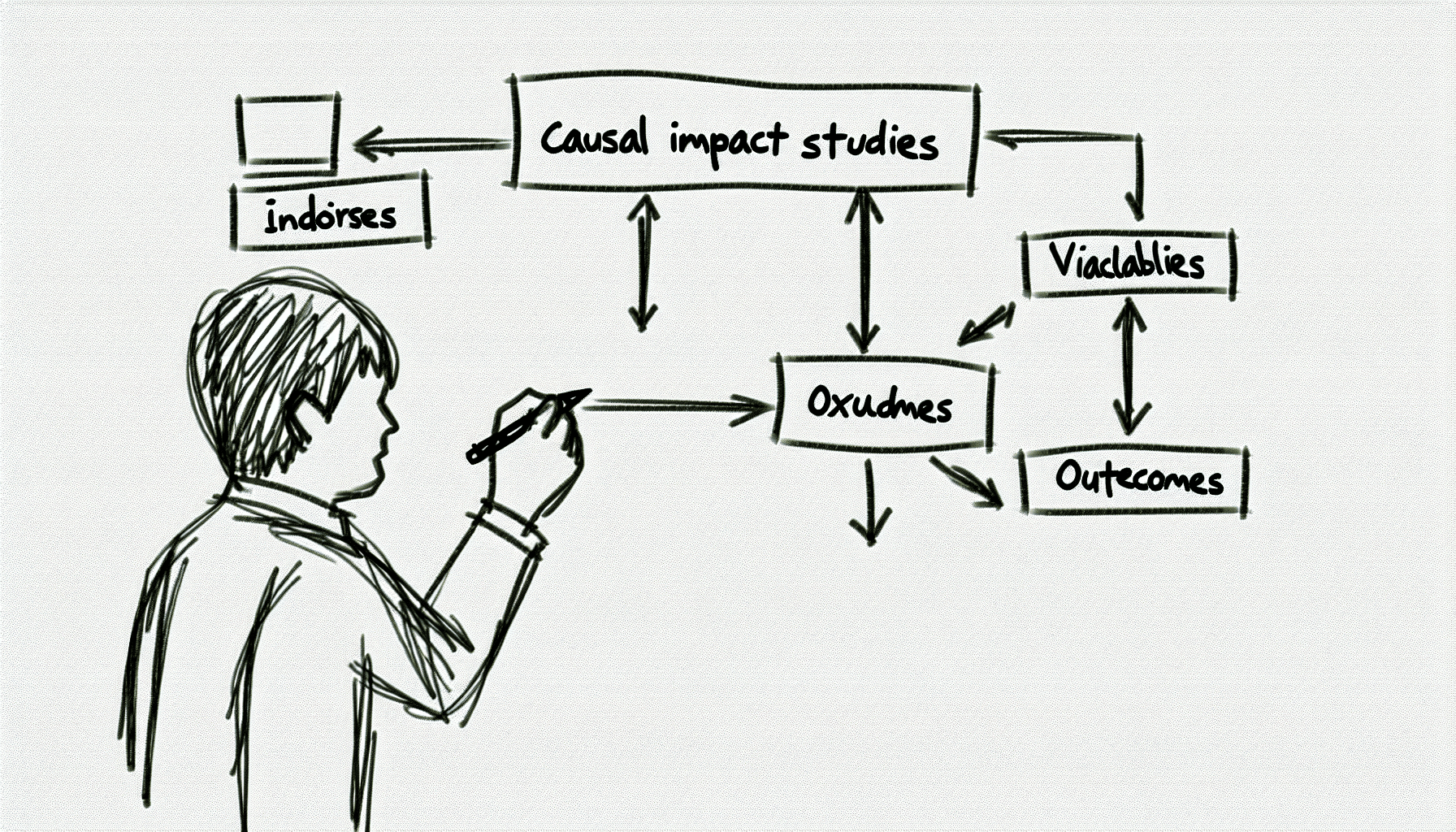
Causal Impact Studies: Unlock the Hidden Truth Behind PPC Campaign Changes
Understanding the Core of Causal Impact Studies in PPC
If you have ever delved into the world of Pay-Per-Click (PPC) advertising, you may have heard the term causal impact studies. This analytical approach is designed to determine the actual effect of a marketing campaign on consumer behavior, distinguishing between correlation and causation. In a world overflowing with metrics, understanding the core of this methodology is essential for marketers aiming to maximize their PPC efforts.
You might be wondering why this is important, right? Well, traditional methods like A/B testing have their limitations when it comes to adapting to complex variables in real-time marketing environments. Causal impact studies strive to give a more comprehensive view of customer reactions to your PPC strategies.
By analyzing data before and after a specific PPC campaign, one can identify genuine changes in behavior attributable to those campaigns. So, rather than just measuring sales or clicks, we can delve deeper into how the campaigns affect long-term customer loyalty and lifetime value.
For instance, a well-designed causal impact study could show not only a spike in sales during a holiday campaign but also an increase in returning customers afterward, thereby illustrating long-term benefits.
That being said, implementing causal impact studies isn’t without challenges. Marketers often must ensure they have sufficient data before the experiment—the more data points, the better. Moreover, the construction of the model itself can be complex. Understanding how to effectively analyze and interpret the results is crucial.
In summary, while causal impact studies pose their fair share of complexities, the insights gained can be invaluable. They allow marketers to see beyond surface-level analytics, revealing critical information that can shape future strategies. In a competitive marketing landscape, every edge counts—so why not consider adopting this robust analytical tool in your next PPC campaign?
In a world where every click counts, a deeper understanding of the dynamics at play can help you optimize your approach effectively and adapt to changes swiftly.
How Causal Impact Studies Provide Deeper Insights Than A/B Tests
In today’s digital marketing landscape, A/B testing is a commonly used methodology to measure the effectiveness of different strategies and campaigns. However, it often falls short when it comes to understanding the true causal effects of changes in the marketing strategy. This is where causal impact studies come into play. By providing deeper insights into what would have happened without the intervention, these studies enable marketers to make informed decisions that boost their return on investment (ROI).
Understanding Causal Impact Studies
Causal impact studies employ a sophisticated statistical framework to estimate the potential outcomes of a marketing intervention. Basically, it simulates a counterfactual – what the results would have been if the campaign or change had never occurred. This approach allows for a more comprehensive evaluation of the effectiveness of actions taken. Additionally, it accounts for various external factors that might impact the results, such as seasonality or market trends, thereby providing a clearer picture of the causal relationship.
On the other hand, A/B testing only allows for direct comparisons between two variations in a controlled setting, which can lead to misleading results. For instance, if you test two different ad copies, you might find that one performs better than the other. However, this does not account for variables that could be affecting these results, like changes in consumer preferences or external market conditions. In contrast, causal impact studies give a nuanced understanding by incorporating these factors into their analysis.
Advantages of Causal Impact Studies
Causal impact studies bridge the gap between correlation and causation, providing marketing teams with actionable insights.
Thinking about a campaign analysis? You may want to consider incorporating causal impact studies into your strategy for better understanding the effectiveness of your PPC changes. It might just be the key to maximizing your marketing ROI.
Remember, while A/B testing has its merits, it should not be the sole method in your marketing toolbox. Causal impact studies offer the depth and context that can significantly elevate the understanding of your marketing efforts.
Conclusion
Ultimately, embracing causal impact studies could revolutionize the way marketers analyze and assess their campaigns. By moving beyond surface-level insights and diving deep into causal relationships, you will be better equipped to navigate the complexities of consumer behavior and deliver results that truly resonate. This deeper understanding will not only enhance your marketing strategies but also build a solid foundation for future campaigns.
Implementation Tips: Data Selection, Model Building, and Accuracy Validation
When embarking on causal impact studies, the first and foremost step that requires careful consideration is data selection. The quality and relevance of the data you choose can vastly influence the results of your analysis. Ideally, you’d want to utilize clean, comprehensive datasets that cover a substantial time frame before and after your intervention. It’s also crucial to ensure that the data encompasses a variety of variables that could affect the outcome. For instance, if you’re evaluating a PPC campaign’s effectiveness, look for data on user demographics, spending habits, and external economic factors.
After you’ve gathered the necessary data, the next phase involves model building. This part can get quite technical, as it often involves statistical methods and algorithms to assess the relationship between your intervention and its effects. You may consider models such as Bayesian regression, which can help in understanding the uncertainties in the data. Statistical programming languages like R or Python can be particularly helpful here. It might sound daunting, but with the right tools and resources, building an effective model can be simplified considerably. Furthermore, it’s advised to run multiple models to validate the initial findings and ensure robustness in your results.
Lastly, accuracy validation serves as a critical final checkpoint in your causal impact study. This step ensures that your model’s predictions align with actual outcomes. Techniques such as cross-validation can be immensely useful here. Essentially, you’ll split your dataset into training and testing partitions to evaluate how well your model performs. If discrepancies arise, it may signify that your model requires adjustments or that additional data might be needed for improved accuracy. Ensuring that your model accurately reflects reality not only boosts credibility but also enhances the overall trust in your PPC strategies moving forward.
Should You Use Causal Impact Studies for Your Next Campaign Analysis?
In the ever-evolving landscape of digital marketing, understanding the effectiveness of your campaigns can sometimes feel like attempting to navigate a maze blindfolded. But what if I told you that there’s a way to lift that blindfold? Causal impact studies are designed to help you clarify the true effects of your Pay-Per-Click (PPC) changes by estimating what would have happened if those changes had not been implemented. This is particularly significant in scenarios where conventional methods like A/B testing fall short. These studies can provide a clearer, more comprehensive picture of how your strategies are performing.
When considering whether to use causal impact studies for your analysis, it’s essential to reflect on your campaign’s specific needs. Perhaps you’ve recently made adjustments to your PPC strategy and are left wondering whether those changes were effective or not. Instead of guessing or relying on anecdotal evidence, a causal impact study can give you the data-backed insights necessary to gauge ROI effectively. So, are you ready to dig deeper into your analytics and get an accurate understanding of your efforts? It might be time to embrace this method for your next campaign analysis!
Now, I know what you might be thinking: “Isn’t this just another layer of complexity?” Trust me; I felt the same way initially. However, once I started using causal impact studies, I found them liberating. Rather than second-guessing my decisions based on insufficient data, I could make informed choices based on solid findings. This approach not only enhances your decision-making process but also allows for better resource allocation. So why not try it out in your next analysis? You might find it to be the missing piece of your marketing puzzle.
To wrap it up, consider the transformative potential that causal impact studies bring to your PPC campaigns. Gaining insights derived from robust data can help you optimize performance, allocate resources wisely, and ultimately drive better results. Wouldn’t you agree that it’s time to take a leap into a more data-driven approach? If you’re still on the fence about using this method, it might be worth conducting a small-scale study to see how it fits into your strategy. The journey to better marketing results starts with informed choices! Remember: Analytics is your friend, and understanding its deeper insights can lead you to success.